

Winter Park Small Stream Trout
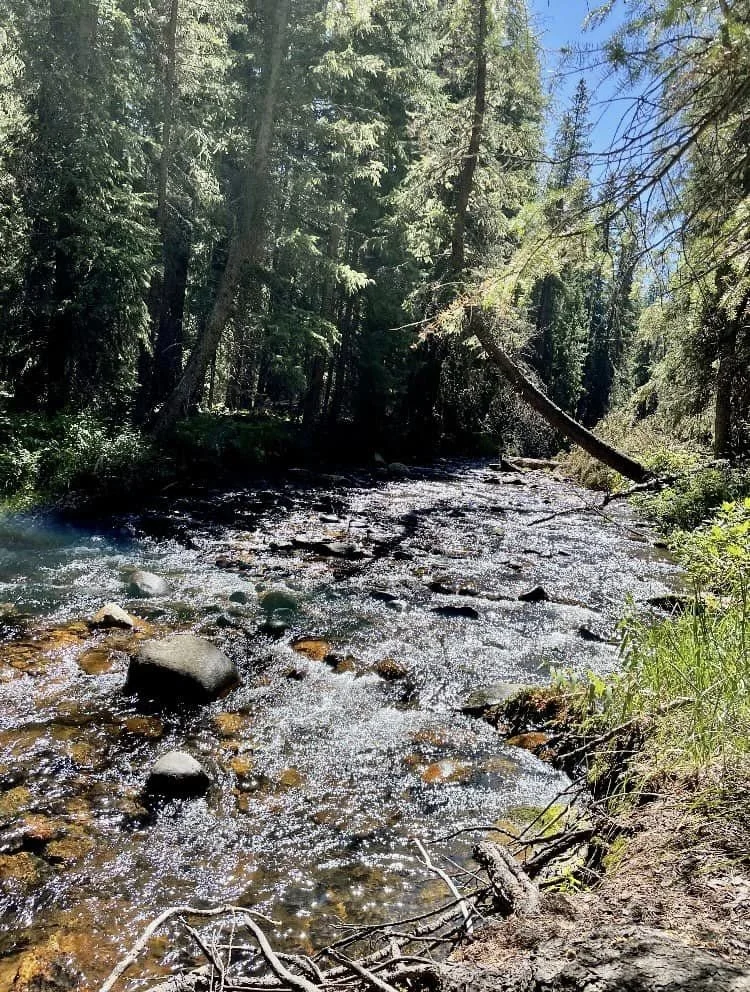
Every year I'm allowed on this earth it becomes more clear to me the benefit of travel. It renews your soul in a way few other pursuits can. What's gained in exchange for your time and treasure are the connections made, lessons learned, perspective, and experiences that can change your life. As a lifelong lover of the outdoors, fly fishing for trout in Colorado for the first time in 2017 was beyond amazing. For decades I've foolishly put this off because the sport appeared expensive to me, especially hiring a guide.
I’ve been lucky enough to return twice since and can share a few nuggets learned from guides as well as a couple of solo successes on the Fraser River.
Spring Runoff
What I learned one morning from my guide Mitch with two simple words has in many ways changed my life.
"I Wonder"

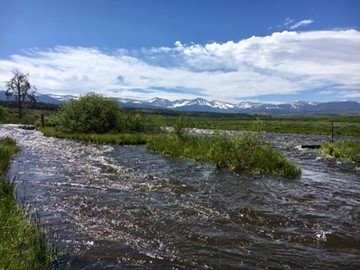
The Fraser River levels in Winter Park fluctuate and can rise significantly during the spring and early summer runoff. This June day was one of the few so far that year where temperatures were above freezing the night before. The river swelled and made the fishing challenging but at the same time presented opportunity to a newbie like me. To catch browns and rainbows sub-surface in dingy water would mean my awful casting skills and presentation could still be productive.
My guide Mitch drove me to this private land owner's property where he has guided countless anglers of varying skill and temperaments. His patience was off the charts as I tried to undo a lifetime of conventional fishing habits that didn't translate well to fly casting. Carefully crossing the below section of river, he tells me his ethos as a fishing guide. What follows is what I recall while trying to not slip on those mossy rocks.
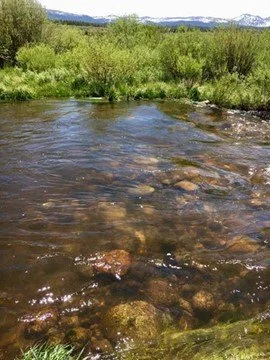
"I wonder. I constantly think like a fish. How would I get the most value for the least amount of effort. I've got to be efficient and smart because life in the river for a fish is not a buffet line. As a guide, yesterday's best hole producing these fish may no longer be reached wading. The eddies, the slow spots beside the current, they’re never the same. Each day is blank slate so while I've fished this same river for decades, the nuances are endless and you must adapt to be successful."
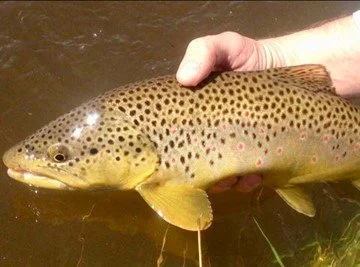
Next we fished an oxbow where another section of stream cut through with a narrow, slow-moving stretch. We drifted at least a dozen times before a brown came up to hit my yellow strike indicator instead of the nymph. "I've not seen that yet but now I've got a couple of yellow pattern ideas to try next time." We switched to a dry fly for about 15 casts to get that riser. With no luck, we decided to move upstream but before heading out, figured we'd try one more time. "I wonder if we try a couple more drifts with that nymph but this time get right along that bank overhang ." The result was the below brown and rainbow trout.
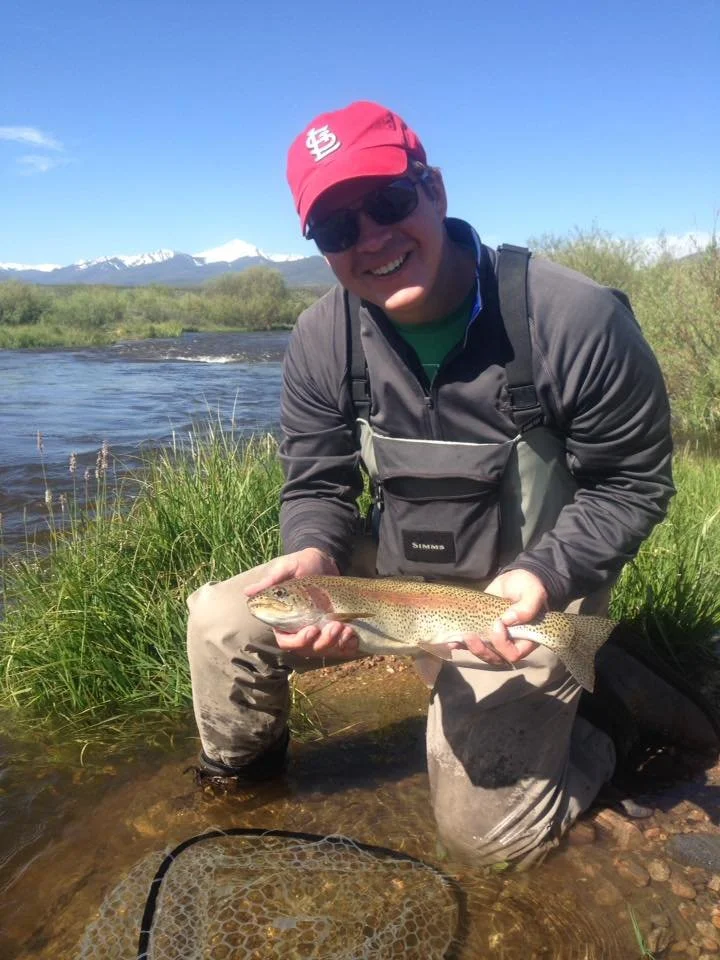
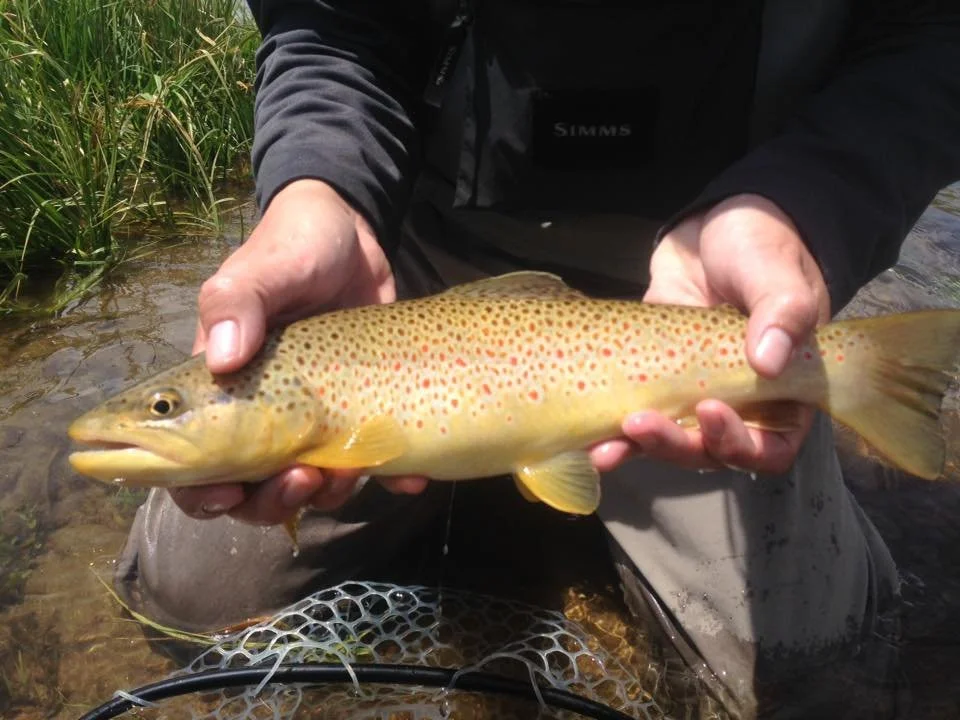
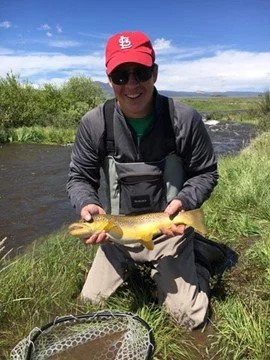
The fishing was awesome and a great memory but not just an experience to file away in a photo album. It's stuck with me.
Summer Skinny Water
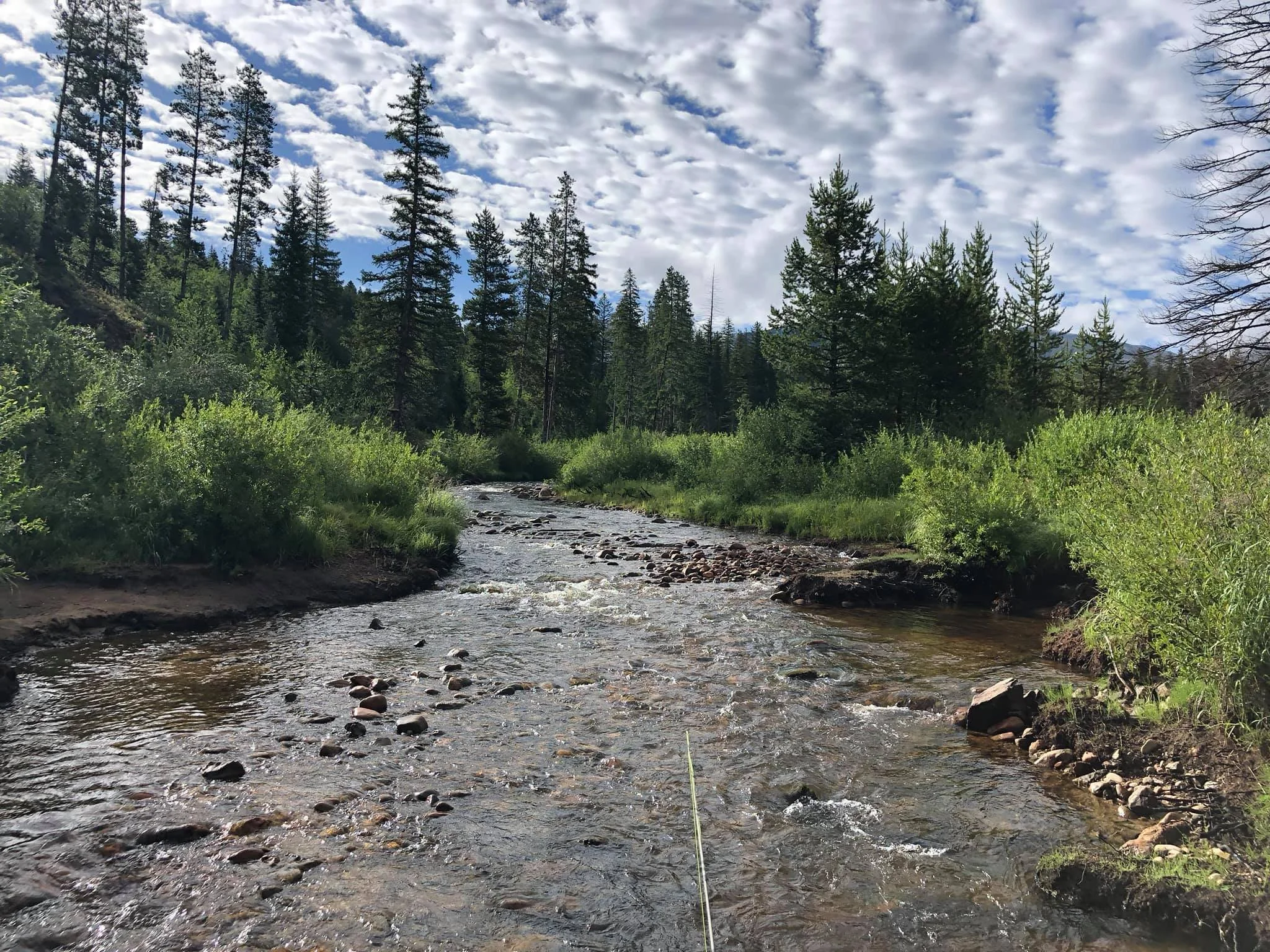
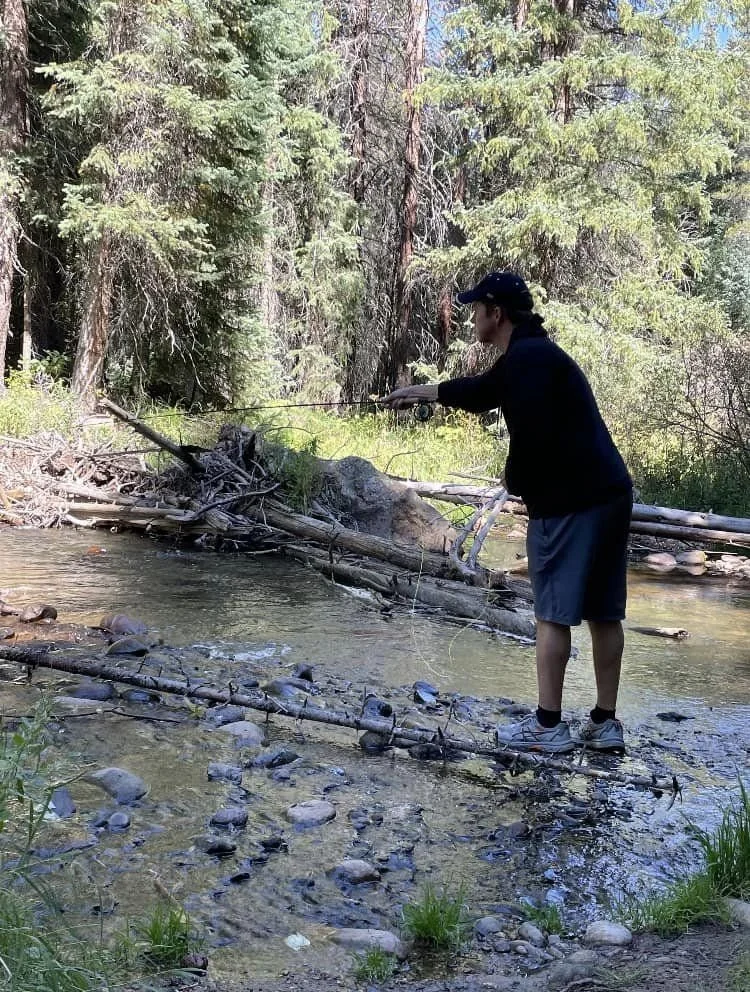
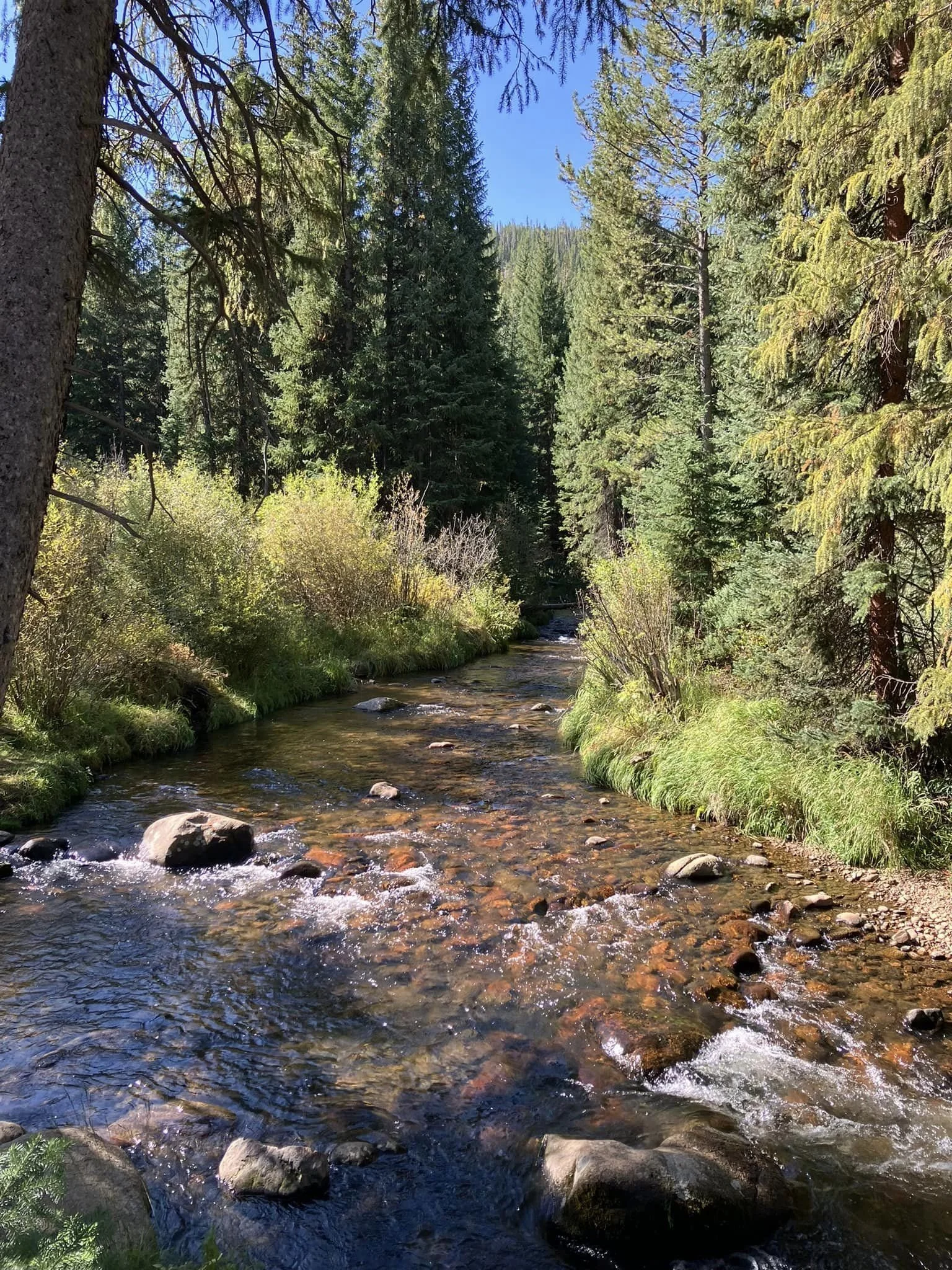
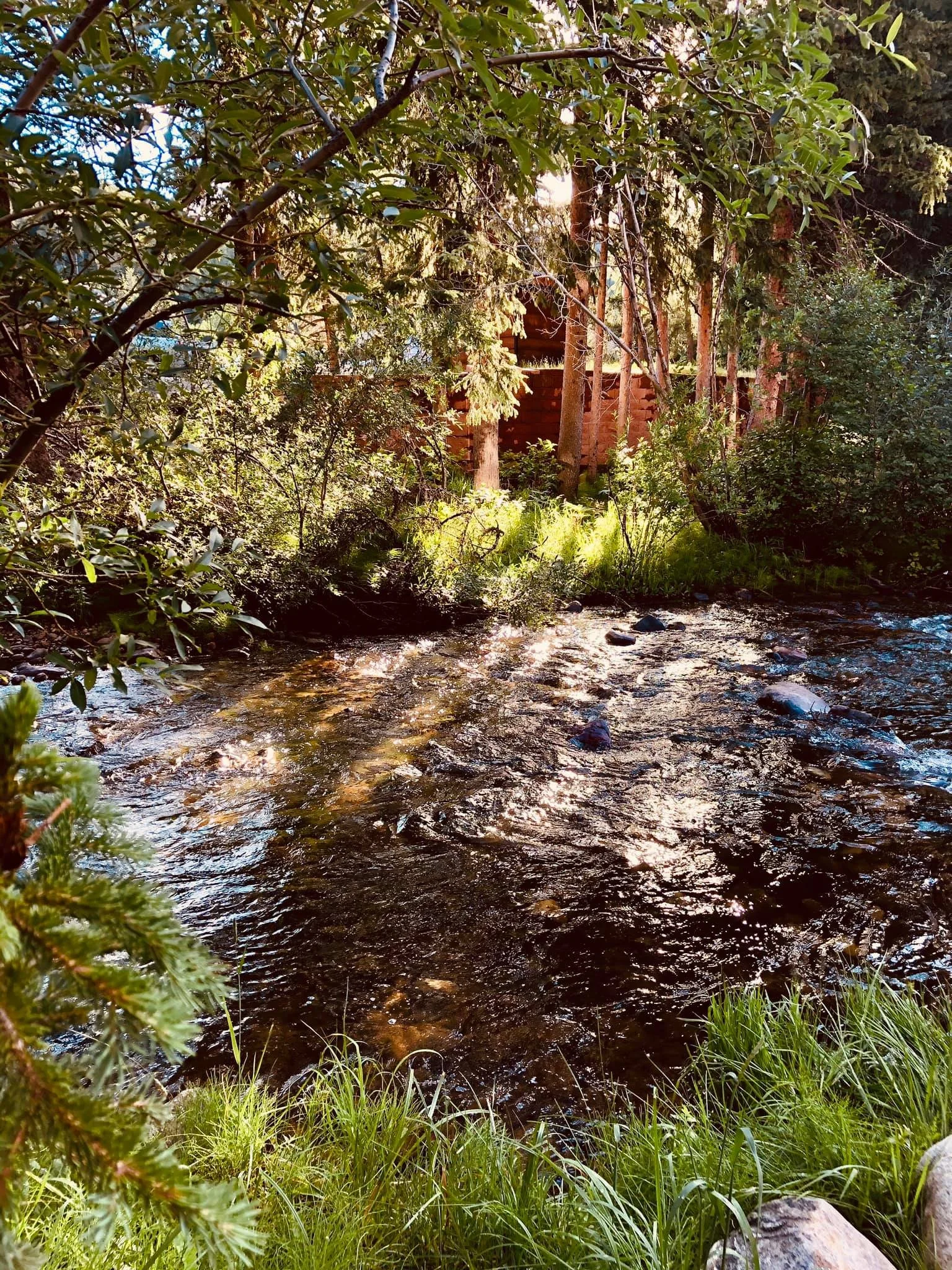
In subsequent visits I was able to fly fish the Fraser in late July and Labor Day weekend. These stretches of the Fraser look so skinny, you wouldn’t think anything substantial could inhabit those waters. I learned otherwise utilizing a few very simple techniques to catch brook and rainbow trout.
Dry Flies
Nymphs
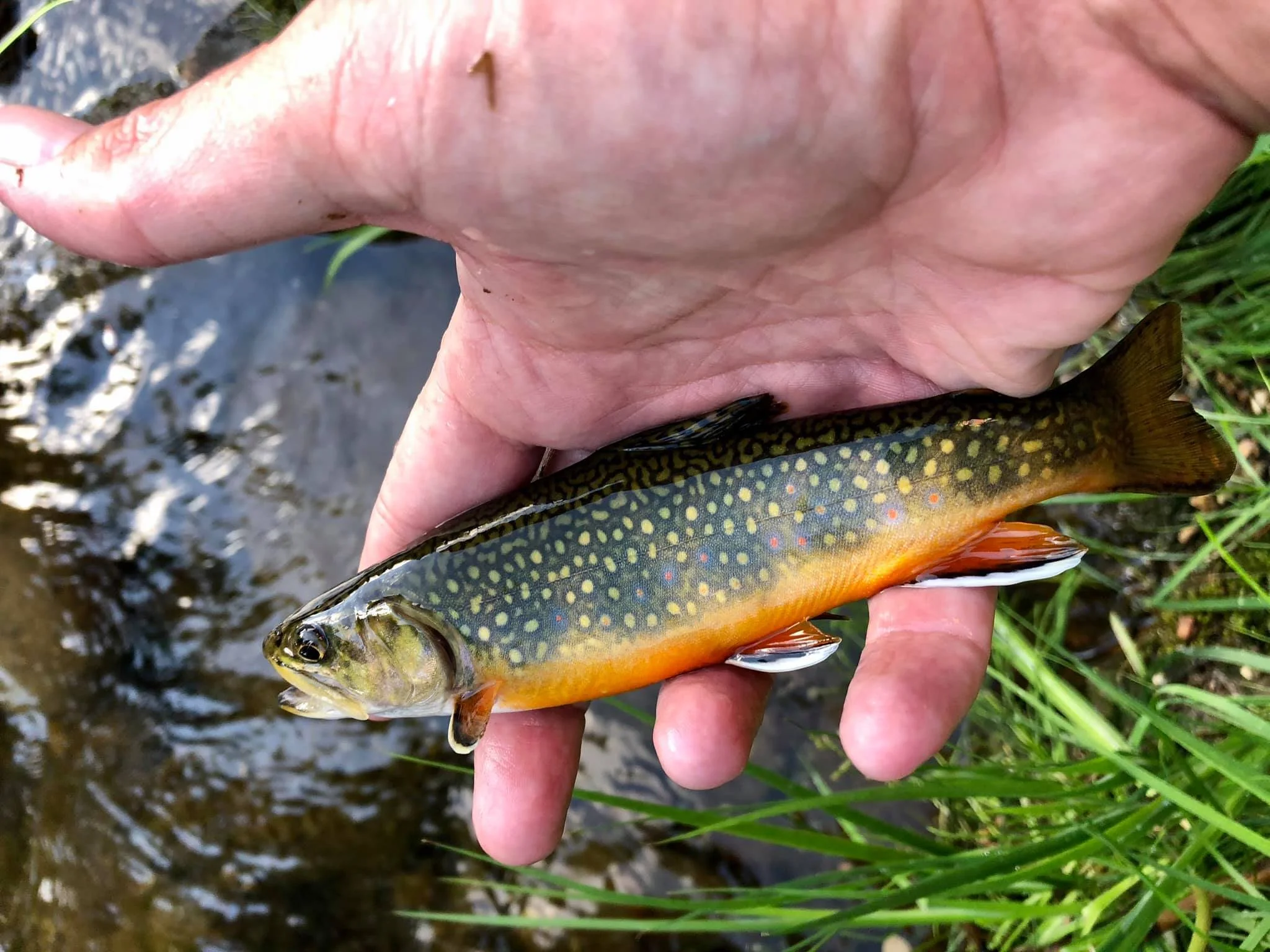
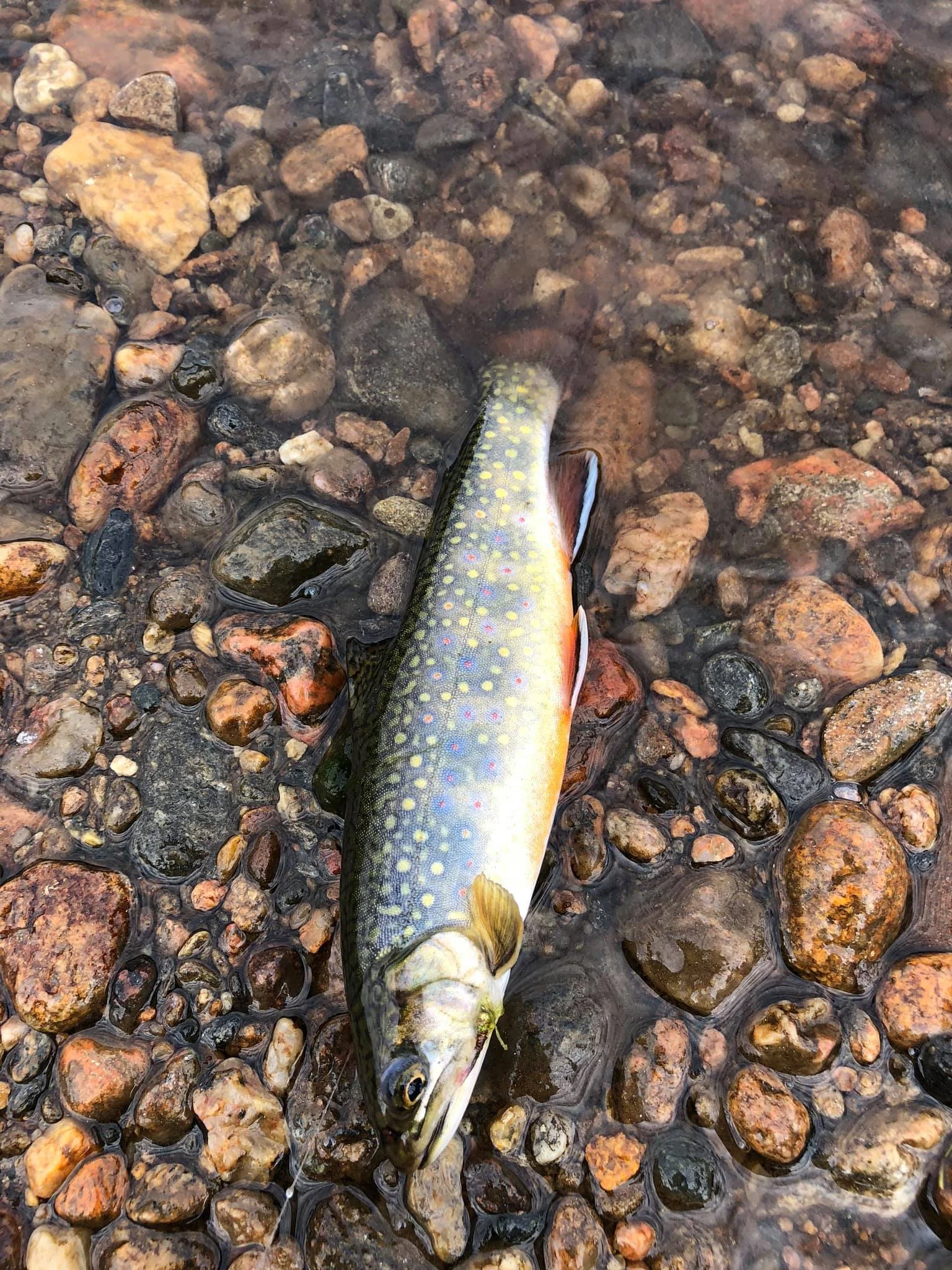
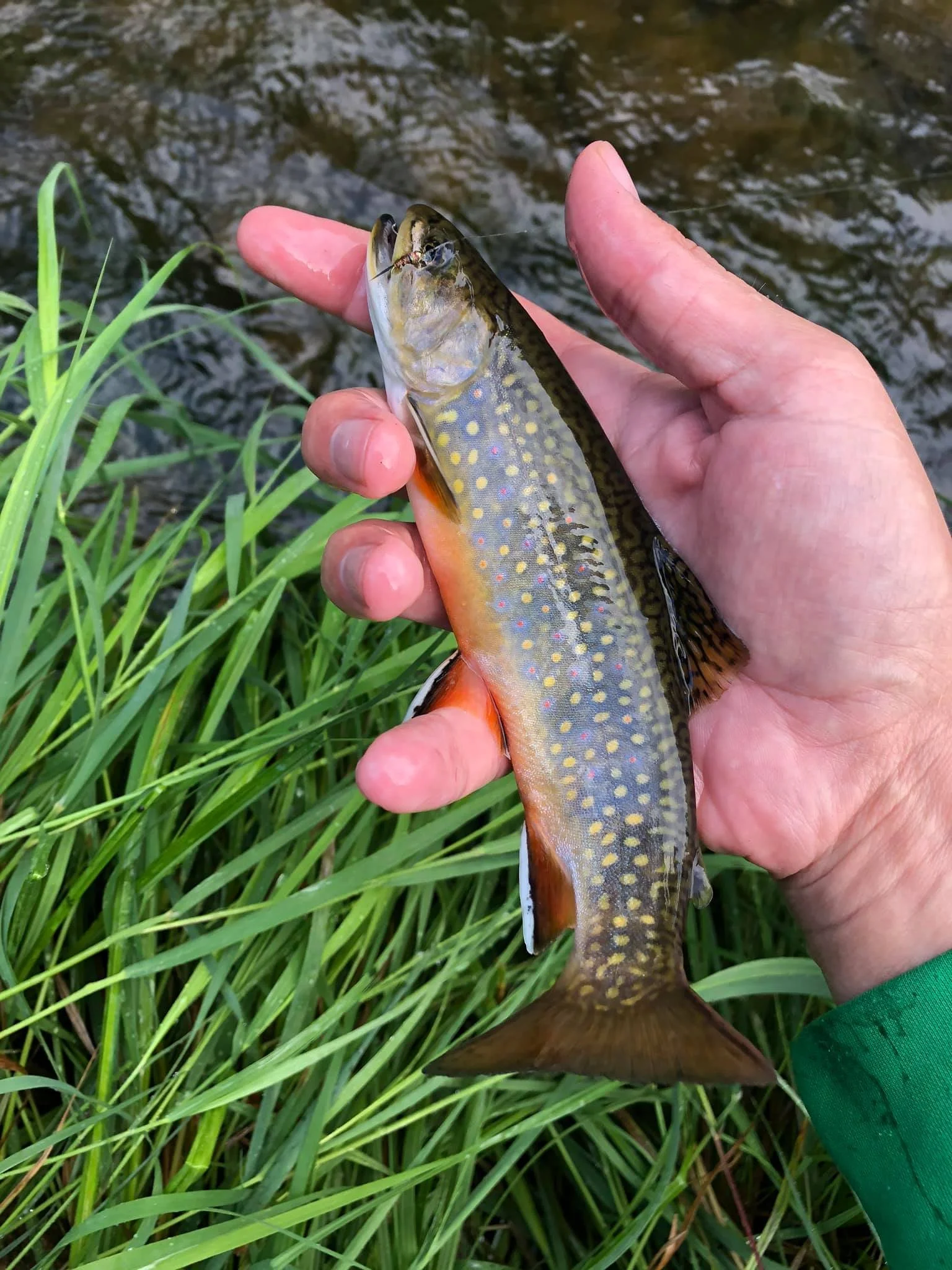

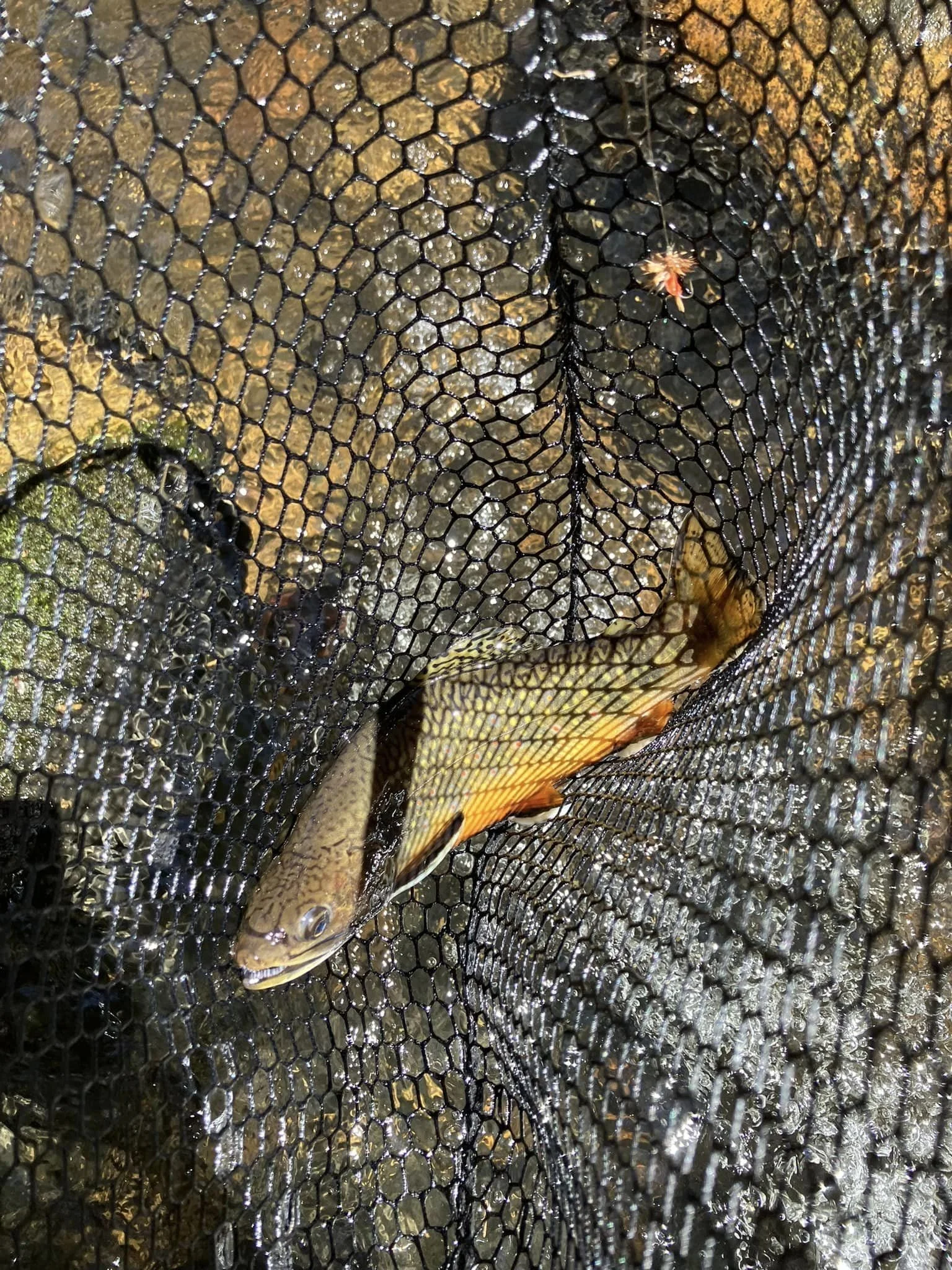
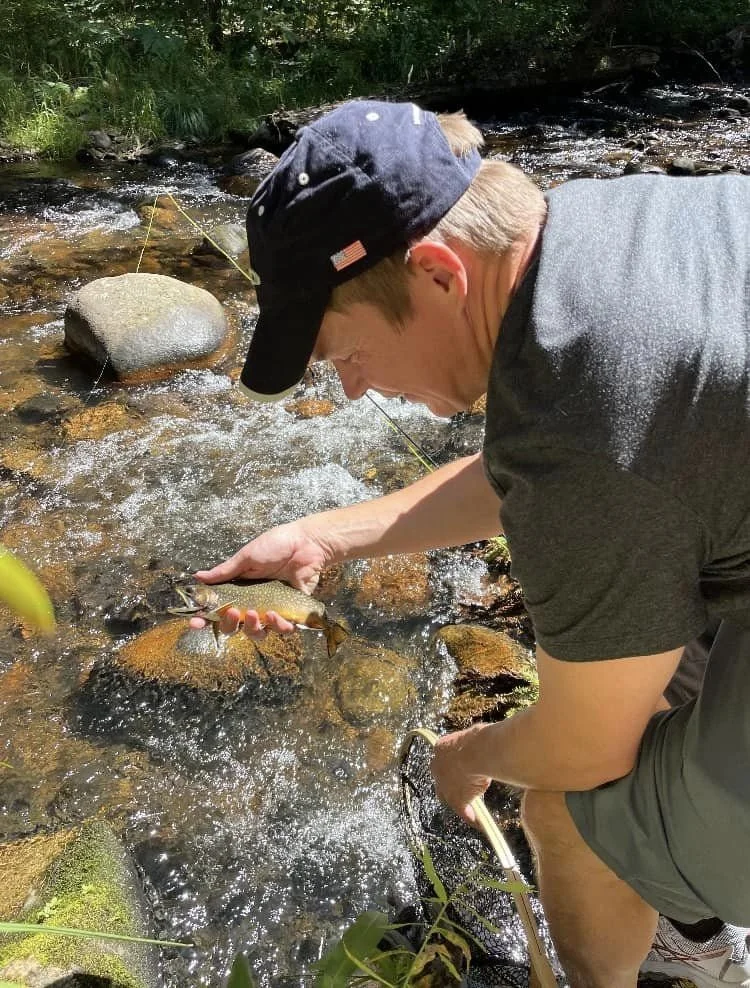
In the deeper pockets I was able to nymph, usually without an indicator, these remarkable brook trout from the Fraser River. Preferred patterns included the Guides Choice Hares Ear
The love of fishing and art run deep in Erik Schmidt’s work
It all begins with an idea.
Who and what we love is deep. It’s a part of who we are. In a 20 year study done at Cornell University, it was found that experiences rather than things have a lasting impact. An enduring happiness that far outweighed the happiness found in purchasing stuff like homes and cars. Experiences and the stories generated become our identity. They enrich us far beyond anything that can be purchased in an attempt to make us more interesting, appear smarter or more attractive.
The love of fishing shared by billions on planet earth runs deep for many. Like a lot of other endeavors, it’s importance in our life can be seen with a quick look at our calendars and checkbooks. For some anglers however, that love runs deep enough to eventually physically become a part of you. Tattoo art is a truly amazing way to rep your love of all things fishing and if there’s anyone who knows this it’s Erik Schmidt. He “gets it” as an angler himself as well as a professional tattoo artist. We had a chance to learn more about his artwork and how he got started in a recent interview.
Tell us about yourself. How did you get started as an artist and angler?
I have always loved to draw and be creative within the visual arts world. I was an art major in college and during that period is when I started getting tattooed. I loved tattoos and I would try to draw my own tattoo designs. Fast forward and I have been a professional tattoo artist for over a decade at Neptune Tattooville in Neptune, New Jersey. This is where my “fish art” was born. I was asked to do a Snook fish tattoo on a friend who gave me the artistic freedom to create the design however I wanted. After I did the tattoo I was inspired to recreate the image on paper using watercolor paints in a “Tattoo Flash” style. Oddly enough, the tattoo inspired my art instead of the art inspiring the tattoo! My fish paintings have a lot of tattoo qualities. Bold, hyper-graphic, saturated images that are simplified and exaggerated to depict certain features of the fish species. So far I have done over thirty species and plan to keep adding new ones.
I began fishing as a young child with my dad and friends, mostly fishing in freshwater rivers and streams in central Vermont where I grew up. We would usually spin-cast on the White River and a few small brooks by my house. I especially loved fishing with light gear on a very small brook right behind the house, we would simply lob a worm or spinner into the small pools and catch brook trout. It amazed me that these fish could survive in such a small environment.
After moving to the New Jersey shore fifteen years ago I have become an avid surfer. I feel at home by the ocean and connected to the way of life that revolves around it. After catching a large striped bass off of a friends boat I was amazed by the power and beauty these fish possess. I now surf-cast locally in Bradley Beach, Avon by the Sea and in Shark River Inlet when I have the time. Fishing is a very personal thing to me and I enjoy the solitude it provides.
Tell me about your favorite fishing experience?
My favorite story would have to be fishing on Marthas Vineyard with my dad in Lobsterville. He had never caught a Striped Bass “keeper” and we were scheduled to be on a ferry home that afternoon. It was our last chance to fish before we left and he was out at the end of the jetty methodically casting into the outgoing tide current with a little pink eel bait. Just before we were going to pack it up, he hooked into a really nice one! We landed it, got a photo for him and released the fish back quickly. The experience made the trip highlight for us both!
Where can folks learn more about your work?
To see my paintings and other artwork, I’m on Etsy at Offshore Artwork. My tattoo artwork can be seen on my Instagram page @erikcschmidt and erikschmidttattoos.com.
Fly Fishing for Gar
It all begins with an idea.
There a fewer fish species more despised than the Gar. They are one of the most resilient creatures on earth, with fossils dating back to the Jurassic period onward. So love them or hate them, they will likely be in rivers or lakes near you for many years to come. Their physiology, specifically their swim bladder, allows them to stay out of water longer, inhabit waters with minimal oxygen, and even pollution yet they still thrive. Michael Bishop is into a lot of things including an upcoming blog at Flyoholics.com but another interest he has is Gar on the Fly, a Facebook page full of fun pics, giveaways, and other good stuff. I invited Michael to share more about his experience and provide some tips to both fly fishing novice and veteran get started with gar fishing on the fly.
When I tell my friends I went fly fishing for gar; their response is a ‘mixed reaction.’ Some of them look at me like I’m an alien that was dropped off by a UFO passing by planet earth. Others will get a big smile on their face, nod at me, and then begin to think of a way to call in sick to work. Most folks I know who fish for gar in this neck of the woods do so with the traditional method of live bait. When I tell my fishing friends I love fly fishing for the gar, they’ll say to me in utter disbelief ‘I can’t even begin to imagine what that’s like.’ I have to say, there’s a lot of truth to that statement. There are no words to describe what it’s like to catch a big, hungry, trophy gar on a fly rod.
My first encounter with Gar on the Fly was a complete accident. To be honest with you, fly fishing for Gar was the last thing on my mind. I was fishing for bass on a metropolitan lake, and I noticed quite a bit of commotion at the surface of the water. At first glance, it looked as if largemouths had moved into the shallows to feed on the spawning sunfish. With my inflatable boat in position, I quietly dropped the anchor down. The suspense of targeting these shallow-water largemouths was starting to eat away at me, or so I thought it was largemouth bass. The size of fish I saw made my jaw drop! Those weren’t largemouths attacking the schools of sunfish; they were Longnose Gar. And I do mean lots of Longnose Gar—some of them were absolute giants.
My family and I were new to the Ozarks, and I heard a great deal about Longnose Gar. However, this was the first time to see Gar. Knowing nothing to the contrary, I cast my bass-size streamers at the Gar. My frustration mounted as I hooked many gar, only to have them come off the hook and lose them.
I went home that night and searched for as much information as possible on fly fishing for Gar. The articles I found had one element in common: The writers spoke about using rope flies for Longnose Gar. Using rope flies, with no hooks, really sounded strange to me. But I decided to take the plunge and give the recommended rope fly a try.
Armed with my rope flies, I went back to the lake in search of the Gar. In 3 hours of fishing, I hooked over 15 longnose gar! The largest Gar maxed out at 40 inches long, and I missed some gar that was over 50 inches. The power and stamina of these gars were unbelievable! To say I became addicted to Gar on the Fly is an understatement, and the experience set me on the path to ‘Garmania’ and becoming the ‘Garoholic’ that I am today.
WHY FLY FISH FOR GAR?
Humans have persecuted few species of fish with such brutality to the extent that Gar has endured. During the 1800s, people used to blow Gar up with dynamite. They believed Gar would destroy the resident populations of game fish. Sadly, the myths and misinformation of the past have led some anglers to think the Gar is nothing more than a nuisance species.
Why do I I fly fish for Gar? To me, the mystique of fly fishing for Gar is very appealing. The Gar is a beautiful fish! Traditionally, anglers who fish for Gar use the conventional method of live bait and lures. Anglers who pursue Gar with regularity are a minority, and there are even fewer anglers who fly fish for Gar. Fly fishers who pursue Gar are a rare breed! There’s very little information published on fly fishing for Gar, and misinformation from the past may influence the writings that are available. Fly fishing for Gar is starting to become very popular with adventurous anglers who have a taste for different things. In fact, there’s even a new Facebook group ‘Gar on the Fly.’
Gar is the perfect fish for the beginning fly fisherman. Introduce someone who’s new to fly fishing for Gar, and I can almost guarantee you they’ll be fly fishermen for the rest of their lives. For the novice fly fisherman, the thrill of catching panfish is great fun. However, the experience of seeing a 40-inch fish strike your fly with the power of a freight train will etch itself into the memory of an ANY angler for years to come!
Fly fishers dream of taking exotic trips in search of the fish of a lifetime. Fly fishing for Gar offers one of the best opportunities for the angler to land your dream fish, right in your backyard. When I say Gar can provide you with the chance to land a real trophy fish, I mean that in a genuine way. I have access to 5 bodies of water where I regularly pursue Gar, all of which are close to home. Some of these fisheries hold outstanding numbers of enormous Gar. I’ve lost Gar on the fly rod that 55 inches long, and I’ve spotted some fish that were over 60-inches in length!
Gar is a great ‘stepping stone’ for the novice fly fisherman. Fly fishing for largemouth bass, pike and muskies require casting large flies tied on 3/0 to 6/0 saltwater hooks. New anglers can’t cast these larger patterns. The majority of flies we use for Longnose Gar are constructed from nylon rope, and they don’t require the use of hooks. The novice angler can get comfortable with casting larger flies without the fear of dealing with larger hooks, and this can help them to make the transition to casting large streamers gradually. Let’s get one thing straight: Casting 50 feet of fly line, in the wind, with a 6-to-12 inch long fly that tied at the end of your leader/tippet is not something to take lightly.
People who refer to the Gar as a ‘trash fish’ have never taken the time to study the facts. The great news is that anglers & fisheries managers both have seen the need to change this way of thinking. On a variety of lakes and river in our state, I’ve seen signs our Game and Fish Department have posted which show anglers how to tell the difference between the various species of gar. Here in my home state, fishers who are desirous to fish for alligator gar are required to have a special permit, and report catches of alligator gar to the Department of Game and Fish.
BASIC TACTICS
When it comes to fly fishing for gar, you need to think in terms of the gar’s preference for warmer
water. The months of July and August can be some of the best months to fly fish for gar, and we heartily encourage you to take advantage of this peak season. Fly fishing for Gar during the ‘dog days’ of summer is a bonus to the fishing season. Many of the game fish we love to catch will often be in a neutral/negative mood during the hot, daytime hours.
The angler who understands how gar responds to seasonal changes can pursue Gar throughout the calendar year. To this day, I hooked-and-lost my biggest longnose gar, ever, while fly fishing for walleyes in a local river during November. I spotted the gar sitting stationary at the bottom of a pool in the crystal-clear water. I cast the fly ahead of the gar, retrieved it, and let it sink down towards the gar’s mouth. The large female moved a few inches, inhaled the fly, and the battle was on. I left all of my gar flies/equipment at home because gar was the last fish on my mind in November. After a 15 min fight, I brought the gar close to my boat and had taken a section of rope from my anchor that I could use to land the fish. The hook fell out of the gar’s mouth, and I watched it swim off before I had a chance to bring it in for a picture. This longnose gar was easily over 55-inches long. It was a very painful lesson!
GAR LOCATION
We’ve all heard the old saying “90% of the fish hold in 10% of the water”. This statement certainly holds true for gar. In fact, gar are the very personification of the general rule! So before you plan a day’s outing in search of gar in a new body of water, spend some time exploring the waters that you intend to fish for gar. Not all watersheds are created equal, meaning that some rivers/lakes will naturally hold higher numbers of gar than other bodies of water do. A call to your local Game & Fish Dept, local bait shops, research on google/google earth, etc.. can all be excellent starting points to put you in the right direction. From my own experience, local Game and Fish officials love to hear from anglers who are wanting to pursue gar–especially when you tell them that you’re fly fishing for gar. After you’ve done some research and have located some perspective gar waters, you can then start exploring those waters.
While you’ll find the occasional gar swimming & surfacing throughout the water, the largest Gar will reside in areas of river/lake that meet their needs for food, shelter, and safety from the current. One of the most common patterns I have found in fly fishing for gar is a pattern of seeing a staggering number of gar found together in ‘wolf packs.’ Prime locations for aggregated gar are river bends, long pools & deep holes that hold schools of threadfin shad. Some of these holes are home to not only incredible numbers of gar, but will also hold some absolute giants. I’ve seen longnose gar in these prime areas that were easily over 60 inches long.
When you find these prime areas, take note of where those areas are located and mark them on your map. You can be sure that gar will be there from 1 season to the next season. And be alert as to what’s going on around you. Don’t make the mistake I’ve made on numerous occasions of paddling down the river and admiring the plant/animal life along the river bank–only to turn around and see that a 48-inch Gar was swimming alongside my boat. In August of 2017, I was startled by a 50+ inch longnose gar that was swimming alongside my boat. The Gar drifted back into the river depths before I had the chance to cast my fly out to it. It’s enough to drive you to mental insanity!
GEARING UP FOR GAR
When it comes to tying flies for gar, I’ll use downsized patterns early in the year. Other times to use smaller flies is when casting to gar that is in an inactive-to-neutral mood. A perfect example of this is the experience I mentioned earlier of missing my largest-ever longnose gar in cold water that was holding tight to the bottom of the pool. I will also use downsized flies when I see a longnose gar that is swimming about by itself. I’ll cast the fly slightly in front of the gar and let it pause, which will get the gar’s attention. They’ll move closer to inspect the fly. Once the gar is close to the fly, I’ll strip in about 1 inch of fly line to twitch the fly just a little bit, which often results with the gar inhaling the fly and the fight is on!
As previously mentioned, flies made out of nylon rope are prevalent for longnose gar fishing. Not only do these types of flies have great hooking percentages, but nylon rope also takes pen markings very well. Casting large flies for gar is very safe because gar flies do not require the use of hooks, which is advantageous for the angler that is new to fly fishing. In contrast to materials like zonker strips or rabbit strip hides, nylon rope flies don’t get water-logged. Even large gar flies can be relatively easy to cast with a balanced rod/reel. The peak summer months usually calls for fishing with larger patterns, or when dealing with hungry, aggressive gar. Fishing for gar in murky or stained water will also require the use of larger flies. It’s rare that I’ll fish with anything smaller than 7 inches long during the peak of the gar season.
Ideal rods for casting larger gar flies are in the 7- to 9 wt range. I carry two fly rods with me in the boat. Both of my rods have fighting butts on them; which helps provide some extra leverage when dealing with large gar. One of my reels contains a weight forward floating bass bug tapered fly line. The large taper of these fly lines does a great job to help you to cast larger gar flies.
My 2nd rod & reel is spooled with a wet-tip fly line that I can use when I need to get the fly down deeper. Fishing topwater gar flies with a wet-tip fly line results in a suspended or ‘jerk bait’ style of presentation, which has proven to be a very effective technique. You can add a little bit of weight to the hook shank to slow down the rate at which the fly will rise back to the surface. Slow-rising ‘jerk bait’ style of gar flies seems to trigger gar to strike more often than flies with a faster rate of descent do. Believe me when I tell you this: seeing a gar attack a diver/jerk bait style of fly that is slowly rising back to the surface is an incredible experience.
My topwater gar flies will often consist of nothing but nylon rope and diving heads made out of foam or cork. For both surface and subsurface fishing, I prefer to attach my flies to the leader with the traditional non-slip mono loop. I have not found wire leaders to be necessary for gar. The gar will eat the nylon rope fly, which results with a tangled fly in the gar’s teeth. It’s essential to carry a good pair of sharp scissors with you, which makes the job of cutting the fly from the gar’s mouth an easy task to do.
Various types of retrieves work well on gar, which is dictated by the mood and behavior of the fish. Most giant gar seems to prefer big, bulky flies that are stripped slowly at various depths. There are many times when the strike from a large gar is very subtle. These subtle takes will feel like mere bumps or taps. Anytime you think a fish is biting at the end of our lines; our natural reaction is to set the hook. Trying to hook the fish when you feel those bumps and taps will result in the fly pulled out of the gar’s mouth. When you get these little ‘bumps’ of a strike (and it’s very often a big fish on the end of your line that’s striking very subtly), let the fish go with the fly for about 10-to-15 feet. Don’t make the mistake I’ve made of immediately setting the hook in these moments. Let the gar take some line so that your nylon rope fly has a chance to get tangled up in the gar’s teeth. When this happens, you’ll often feel some ‘head shakes’ from the gar….that’s the time to set the hook. When you set the hook on them, tighten up on the fly line with your hand vs. setting the hook with the rod, and hold on! Once hooked, a big gar will make wild runs and leaps like few other fish do.
SAFETY IS VERY IMPORTANT
Be very careful when you do get the Gar close to the boat. Wild, thrashing, leaping gar have been known to jump right into your boat. Trust me when I tell you: an angry 40-inch fish won’t do be doing your legs any favors. Even their scales can cut your legs. Because of this, I always prefer fishing in my chest waders. I also love drifting and getting out of the boat to fish in the river as I’ll also be in search of smallmouths, largemouths, and panfish.
I’m personally in favor of wearing the gar down a little bit before trying to bring it in the boat with me. Gar will often be calmer and more manageable to catch-and-release. Leaving the gar in the water, I’ll tie a slip knot with some extra rope that I keep with me to put over the gar’s mouth. Just tighten the slip knot up and then bring the gar into the boat. Take along with you a sharp pair of scissors to help you cut the nylon rope from the gar’s teeth. A stiff brush should then be used to help you remove any remaining nylon rope fibers that may still be lingering on the gar’s teeth. A yardstick is a great help in holding the gar’s mouth open. Fish handling gloves, such as Lindy’s fish handling gloves, can go a long way in helping to protect your hands while removing your rope fly from the gar’s mouth. Keep a firm grip on the back of the gar’s head while extracting your rope fly. Be cautious as you remove the fly, as gar can explode on you when you least it.
Of all of the fish I love to pursue with a fly rod, gar is unquestionably near the top of the list. Prejudice and misgivings have kept many anglers from intentionally pursuing gar. However, I can assure you the first time you experience hand-to-hand combat with a trophy longnose gar; you will be suitably impressed.
Nature is the subject and the medium at Scott Hirschi Fine Wood Burning
It all begins with an idea.
Fish are beautiful. Even if you’ve only caught a handful in your life, you know that no two specimens are alike. The scaling, colors, and spotting so unique, we anglers are just as anxious to snap a pic of our catch as get them to shore. I’ve always thought of each one a distinct work of art. I appreciate the hundreds of catches I see in my feeds each day online and while the photos do these fish plenty of justice, sometimes an artisan can bring out an even higher level of detail to catch your eye. Especially for a memorable fish from a memorable trip, you can take your photos and make much more out of them. Some catches can be transformed into a permanent keepsake to hang on your wall, decorate your man cave or complete your study mantle. Expressed in a new medium, your special catch can be seen in a whole new light. This happens to be the work of Scott Hirschi and it’s called pyrography.
pyrography: the art or technique of decorating wood or leather by burning a design on the surface with a heated metallic point.
He takes some of the finest woods and turns them into gorgeous artworks that bring out the sometimes overlooked aspects of your catch. To learn more about how he does this, we reached out to Scott talk more about him and his artwork.
Tell us about yourself. How did you get started as an artist and angler too?
I’ve been an artist and a fishermen as long as I can remember. When I was a kid, fishing was really my favorite activity. My family was heavily involved in stock car racing and that took up most of our summer weekends in Montana. But, on the rare weekend off, my dad would take us fishing and I couldn’t get enough of it. I remember wanting to fish every body of water that we would drive by and wanting to live in the small towns with rivers running right through them. When I got old enough, my friends and I would walk 5 miles to a small creek to fish all day. We would carry our rods and tackle boxes with very little water or anything else in the hot summer just to fish. I discovered fly fishing as a young adult and taught myself through trial and error. I still love it every bit as much and I fish a couple times a week on average throughout the year.
As far as art goes, I was always drawing. My coloring books as a kid had a blank page inside the front and back covers and that was always filled with drawings, mostly of race cars. I thought I wanted to be an artist and my focus turned to wildlife in middle school. I got a really small art scholarship to a small Wyoming college and thought I’d be a fine arts major. I wasn’t college material and didn’t last. I dabbled in pencil drawing and some pen and ink stuff off and on for many years. Then, about 8 years ago, I discovered pyrography (wod burning) and found that I was better with a burner than I was with anything else. I put a piece in a charity auction and it sold for much more than I was getting for my drawings. I loved the fact that it is different and you rarely are next to other wood burners when art is displayed. I also like the fact that almost everyone has tried it as a kid and that I’ve taken it to a higher level. So, I set out to see how far I could get with an uncommon media in the art world. Now, I’m in a couple Montana galleries and I’m making it into good juried art shows. This past March, I was in a show in Great Falls, Montana for their prestigous Western Art Week. I’ve been interviewed by Woodworker’s Journal, a national publication. My art is hung alongside some fantastic artists that I look up to. It’s only been three years since I got really serious about it and I’m enjoying every step of it. I have some great artists as mentors and they are very excited about the progression of my art career. At age 51, I’m now ready to do everything it actually takes.
A favorite fishing story. Maybe one that provided(s) art inspiration?
Wow, so many. Most of my favorite fishing memories are of specific fish that are difficult to catch. There was a large rainbow trout on the Missouri River sipping tricos that ignored every cast and every pattern until I finally fooled it with a rusty spinner that was just different enough to catch her attention. There was a large brown in gin clear water. I, somehow, made a perfect cast on the first attempt. I watched that fish move up to take the fly and just couldn’t wait to set the hook. So, I set it slightly prematurely and pulled the fly just before it actually took it. There was another rainbow on the Missouri feeding in a tough spot. I cast at that fish for nearly an hour trying to get the right drift until it ate the fly. I should use these and other personal experiences to inspire art, but it seems that, when I’m fishing, I’m fishing and, when I’m creating art, that is the focus. I’m more inspired by just the beauty of the fish and animals that I encounter. I do a lot of different wildlife in my art, but the fish really get the most attention. Every time I create something with a fish, I am inundated with inquiries about buying it. My galleries want more fish!
What are the unique fishing opportunities near you, favorite kind of fishing to do, tackle tips or tricks?
I live in one of the best trout fishing areas in the country. I am near the headwaters of the Missouri River and it flows very near to Helena. The Missouri as a tailwater is one of the best trout streams in the world. Also, the chain of reservoirs that it flows through are fantastic for trout, walleye, perch and more. I’m a short drive to the Madison, Blackfoot, Big Hole, Beaverhead, Bitterroot, Clark’s Fork and more. Helena is centrally located in Montana, so we really have it all for trout.
One of my favorite things to do is to fish the reservoirs for trout with my fly rod. I have a small pontoon and I can be on the water in twenty minutes. I love fishing chironomid patterns under and indicator for big rainbows. I also love to fish crayfish patterns by throwing them tight to the bank and stripping them. I’m also starting to figure out how to catch some perch and walleye on the fly rod. This smmer, I plan on targeting carp in the bays of Canyon Ferry Reservoir. Add to that many small mountain creeks and I have lots of great options!
Living in Montana has plenty of advantages. For Scott, it’s not only a constant source of inspiration but also a good excuse to get outside fishing often! To learn more about his work check out this link to his page or his Facebook page!
Angling and Art meld beautifully in Slackertide gear
It all begins with an idea.
At River King Fishing we want to shine a spotlight on a variety of fascinating topics and people from the world of fishing. This has led us to interview fishing guides, authors, photographers, and now added to this mixed bag of fishy content will be fishing artists. I could think of no better place to start this new line of features than with Richard Blanco from Slackertide and EddyRedd.
Located at a distinctive intersection of fishing, art, and pop culture that Richard created, Slackertide manages to bring out the best in all three. Iconic images of 80’s Hollywood films, classic rock and country music, SNL comedy legends in their most memorable roles, and more are viewed through the lens of the modern angler. It’s not just his talent for sketch but the truly uncanny skill Richard brings is in the pairing of characters, references, and fish.
Tangled up in BlueFlounder Pounder
If we possessed a sliver of this creativity, it would seem these fishing + pop culture parallels might be more obvious. As if already dwelling somewhere in the subconscious mind of a collective of serious anglers with an equally serious mental catalog of movie, TV, and music references. But like Picasso once said, “Inspiration exists, but it has to find you working”. This feature should serve as inspiration no matter what you’re passionate about. What follows in my interview with Richard is proof that you can make something very real and significant from your own ideas, if you’re doing the work to make that vision come to life.
Tailer Sunrise
Tell us about yourself. How did you get started as an artist and angler too? Richard Blanco aka @Slackertide on instagram is an illustrator, graphic designer, and artist who just tries to make some funny and cool fishing art. I started using the name Slackertide because I thought it worked well with the art I was making. Most of the characters I draw are in some way slackers. My generation were often called “slackers”, and everybody knows slack tide is the best time to make art.
Although I’ve been making art my whole life, I only started mixing art and fishing about 2 years ago, so it’s been a pretty recent turn of events. I made an abrupt change in my style which just happened to coincide with me picking up a fly rod for the first time. Prior to that I was making mostly abstract work, and selling primarily through galleries. Nowadays its mostly all fishing artwork and graphic design done primarily for a brand I’m helping to launch called Eddy Redd.
What’s been your best fishing experience or that has provided you inspiration? Well my favorite day of fishing ever was on the flats off of Harbour Island in the Bahamas. I just couldn’t ask for better set up. Perfect weather, turquoise gin clear water, and I hooked into two nice bonefish… my first bones ever and on the fly too! The experience definitely inspired a few designs.
Ghostbusted
What are the unique fishing opportunities near you? I live in South Florida. So there is nearly every kind of fishing opportunity you can think of. There’s great freshwater fishing for bass. The inshore bite is superb. Walking the beach sight casting is always fun, and of course theres loads of offshore. If I could only fish my area for just one day, I would suggest inshore fishing the mangroves & docks. If offers the opportunity to hook into a wide variety of great fish from snook & jack crevalle to sea trout and smaller tarpon.
Richard’s work should inspire you. There’s creative, untapped potential in us all. Add to that, today’s internet age is leveling the playing field so everyone can make their own platform to create, speak, or to shout their message and share their talents. Marrying those talents with our passions can create impressive works, even entire businesses from what were once only thoughts in our mind. Whatever you’ve got cooking in your mind, don’t let it marinate up there anymore! Start serving that stuff up! Let people tell you it’s terrible, then make it better. Don’t lose another day to woulda, coulda, shouldas, or maybes!
Inspiration exists, but it has to find you working
Pablo Picasso
Check out the link within their names to learn more about Slackertide and EddyRedd.